Liquid Mini-Factories for the Production and Purification of Advanced Medicines
Prof. Ayala Lampel’s lab utilizes bio-inspired peptide condensates to overcome manufacturing hurdles and reduce costs in antibody-drug conjugates


Antibody-drug conjugates are among the most promising targeted cancer therapies, combining the precision of antibodies that identify cancer cells with the killing power of toxic drugs attached to them. Accordingly, their production is complex and highly expensive. Now, a new study led by Prof. Ayala Lampel at Tel Aviv University's Shmunis School of Biomedicine and Cancer Research, funded by an ERC Proof of Concept grant, aims to use bio-inspired liquid mini-factories to produce these advanced medicines more accurately and at lower cost.
Engineering Peptide Condensates
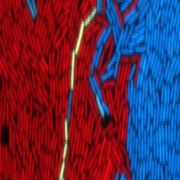
Lampel’s liquid mini-factories harness a process called 'liquid-liquid phase separation'. Peptides, short and relatively simple chains of amino acids (the building blocks of proteins) create multiple types of interactions with each other. These interactions can cause them to accumulate and form stable structures, used in many advanced bioengineering applications leveraging these interactions to create specific solid structures. But by selecting the right peptide combinations, they can remain in a liquid form. And similarly to how oil separates from water, these peptide combinations tend to separate from their liquid environments and form two distinct liquid phases: a molecule-rich phase, also known as condensate, and a molecule-poor phase, which mainly consists of water.
By studying amino acid sequences involved in naturally occurring liquid-liquid phase separation conditions in cells, Lampel uses the different sequences like Lego blocks in designing peptides and condensates with specific functions. Even though her lab is working solely with synthetic biomolecules, without any living organisms, she uses these natural principles with different combinations of peptides to develop multiple types of “smart liquids”.
Lampel has already shown that her smart liquids can respond to the environment and serve as liquid biosensors. She was awarded the prestigious ERC Proof of Concept grant to demonstrate that the smart liquids can not only respond to changes, but can also change molecules inside them to produce better and cheaper advanced medicines - antibody-drug conjugates, or ADCs.
The Challenge of Precision Manufacturing
ADCs work by harnessing what antibodies do naturally: recognize and bind to specific structures. By connecting a toxic drug to an antibody that recognizes a protein found specifically on cancer cells, the drug can be delivered precisely to the tumor while sparing healthy tissue. Several such drugs are already approved and used against hard-to-treat cancers, including breast, blood, and colorectal cancers.
But the act of connecting - conjugating - the drug to the antibody molecule is critical and extremely challenging. Antibodies are large, complex proteins whose function depends entirely on their three-dimensional structure, and they are sensitive to the chemical conditions around them. Today, the drug is usually connected to one of two amino acids - lysine or cysteine - that appear naturally in proteins and can show up many times along the antibody chain. The result is an inaccurate and inefficient process: the drug ends up attached at different positions and in varying quantities on each antibody, producing a heterogeneous mixture. For advanced medicines where production must be highly precise, this means much of what is produced has to be thrown away. And antibodies are already expensive to produce by themselves.
Facilitating Safe Click Chemistry
A newer alternative is click chemistry. Instead of relying on natural amino acids, researchers replace one amino acid in the antibody with an almost identical molecule, but with specific chemical group that can then bond to specific group on the cytotoxic drug, but only under the right conditions - the addition of copper ions, that facilitate the reaction and help the groups connect.
The problem is that we do not want copper ions in our bodies, because they can destabilize similarly important chemical bonds. This has so far limited the use of this otherwise highly accurate method for antibody-drug conjugates. This is where Lampel's liquid mini-factories come in: within her condensates - specific combinations of peptides designed for the task - the copper-catalyzed click chemistry works just as efficiently as in other conditions. But then, by simply centrifuging - spinning the liquids at high speed - the copper ions are easily and reliably separated from the produced molecules, yielding advanced medicines safe for use.
The proof-of-concept project will demonstrate the ability to produce accurate and homogeneous conjugates with cetuximab, an antibody used against colorectal and head-and-neck cancers, and benchmark the condensates against existing methods and their ability to meet the strict regulatory requirements for drug production. If successful, the liquid mini-factories could herald the next antibody-drug conjugate revolution, making them more accessible and accurate to design.
Related Articles